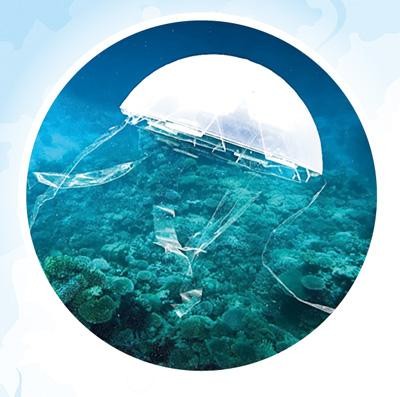
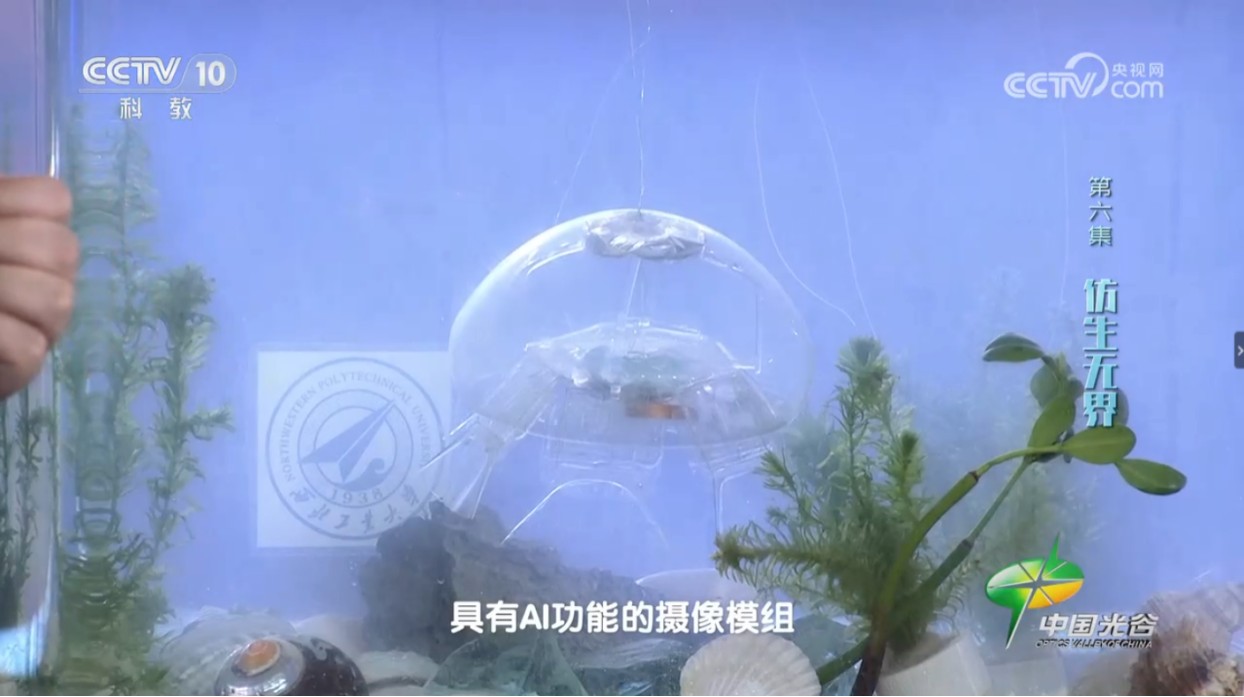
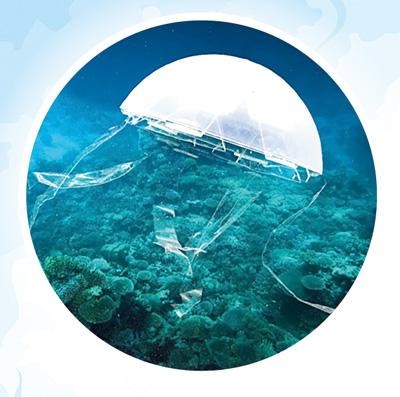
Inside the laboratory, jellyfish in red and white glide freely in an aquarium, while the adjacent bionic jellyfish robot blends almost seamlessly into the aquatic environment, barely noticeable without careful observation.
Exploring the Deep Sea in a Gentler, Quieter Manner
Inside the laboratory, jellyfish in red and white glide freely in an aquarium, while the adjacent bionic jellyfish robot blends almost seamlessly into the aquatic environment, barely noticeable without careful observation.
This miniature robot, measuring only 120 mm in diameter and weighing 56 grams, is a bionic jellyfish robot independently developed by the research team led by Professor Tao Kai from the School of Mechanical Engineering, Northwestern Polytechnical University. With its nearly transparent body and jellyfish‑mimicking muscle structure, the robot precisely replicates the agile vortex‑ring propulsion of natural jellyfish, achieving highly efficient and near‑silent operation underwater.
The average density of seawater is considerably higher than that of air, making movement through seawater highly challenging. When conducting seabed detection, traditional robots consume enormous energy and stir up seabed sediments, interfering with detection operations. “How to act as a pure observer in the ocean, rather than a disturber? This is one of the dilemmas in deep‑sea exploration,” stated Professor Tao Kai. “The bionic jellyfish robot is precisely an achievement addressing the major national demand for intelligent deep‑sea operations, integrating bionics and artificial intelligence.”
As one of the oldest living organisms, jellyfish have inhabited Earth for hundreds of millions of years, thriving from abyssal zones thousands of meters deep to coastal intertidal areas, from polar ice sheets to tropical coral reefs, making them highly adapted marine survivors honed by natural selection. Professor Tao Kai noted that jellyfish are composed of more than 95% water, enabling low‑energy suspension and silent locomotion — characteristics urgently required for deep‑sea observation equipment. On this basis, the team embarked on bionic research and development using jellyfish as a biological prototype.
The bionic jellyfish robot adopts an extreme bionic design: employing hydrogel as the electrode material and an electrohydraulic actuation structure, the robot achieves a water content of over 90%, closely resembling natural jellyfish in both morphology and material composition.
“Out of water, its transparent actuation structure becomes more apparent,” Professor Tao Kai explained as he lifted the robot from the aquarium. Its fully transparent body integrates a circuit board, a miniature integrated camera module, and an embedded artificial intelligence processing chip. “These fin‑like structures generate water flow through contraction and relaxation to achieve propulsion and hovering, producing virtually no noise or noticeable disturbance throughout the process.” This design renders the robot “invisible” in the deep sea, avoiding disruption to marine organisms and ecosystems.
In static testing, the staff activated the robot’s camera module, which quickly locked onto a stationary bottle cap inside the aquarium, with a red bounding box and confidence score displayed in real time on the screen.
A more demanding dynamic test was also conducted: as clownfish swam into the robot’s field of view, the red box immediately locked on and tracked them continuously, without losing the target even when the fish darted among other marine creatures. “As long as a target differs from surrounding objects, the robot can achieve dynamic capture,” said Professor Tao Kai. This capability satisfies the requirements for observing free‑swimming organisms in the deep sea.
What is the scientific value of such target detection?
“This bionic jellyfish robot is not only an observer but also a data collector,” Professor Tao Kai introduced. Currently, it can be equipped with monitoring modules for salinity, depth, temperature, and other parameters, supporting health monitoring of coral reefs. In aquaculture, it enables real‑time monitoring of aquatic environments, providing data support for breeding safety.
“In the future, its applications can be extended to deep‑sea resource exploration, marine ecological surveys, and other fields, allowing technology to explore the blue treasure trove in a gentler manner,” Professor Tao Kai remarked.
The Key Laboratory of Micro‑Nano Systems for Aeronautics and Astronautics of the Ministry of Education, affiliated with Professor Tao Kai’s team, is among the earliest institutions in China engaged in micro‑electro‑mechanical system research. Oriented toward aviation, aerospace, and maritime engineering, the laboratory is committed to the miniaturization, integration, and informatization of equipment, and was recognized as a national‑level innovation team in 2024.
True to the team’s motto — “Take nature as our teacher, and let technology advance quietly” — this bionic jellyfish robot, through nature‑inspired innovation, is building a new bridge for harmonious interaction between humanity and the ocean.